Checkout conveyor belts eventually wear, crack, or stop tracking correctly after years of daily use. The good news is the checkout lane itself usually does not need to be replaced — in most cases only the belt needs changing.
To order the correct replacement, you only need a few measurements from the existing belt or conveyor. This guide shows the quickest way to measure a retail or grocery checkout conveyor belt so you can get a properly fitting replacement the first time.
What You Need
Tape measure (at least 12 ft), a marker or masking tape, and optionally a helper to rotate the belt.
Step 1 — Measure Belt Width
Measure straight across the belt from edge to edge. Do not measure the metal frame — only the belt itself.
Most checkout belts are commonly 18″, 20″, 22″, and 24″, with 24″ being very common in supermarkets. Write this measurement down first. Width is the most important dimension.
Step 2 — Measure Belt Length (Overall Length / OAL)
You are measuring the total belt loop length, not the counter length.
If the belt is removed, lay it flat on the floor and measure end-to-end along the inside surface.
If the belt is still installed, place a piece of tape on the belt, rotate it by hand until the tape returns to the same point, and measure the distance traveled. This measurement is called Overall Length (OAL).
Typical grocery lanes are about 10–12 ft long, with larger stores sometimes reaching 12–14 ft.
Step 3 — Identify the Splice Type
Most checkout belts use one of two connection methods.
Finger splice (endless) belts have a seamless joint, run quieter, and are a permanent installation.
Unibar or laced belts use a connecting pin, making future replacements easier and installation faster.
If you are unsure, a photo usually helps identify it.
Step 4 — Check Belt Surface
Checkout belts are not standard rubber conveyor belts. They are typically PVC, low-friction, quiet running, and flexible enough to wrap around small rollers. Using a heavy industrial rubber belt often causes noise and tracking problems.
Ordering Your Replacement
Once you have the width, overall length (OAL), and splice preference, you are ready to order a replacement checkout belt.
Click here for available checkout conveyor belts from Tide Industrial.
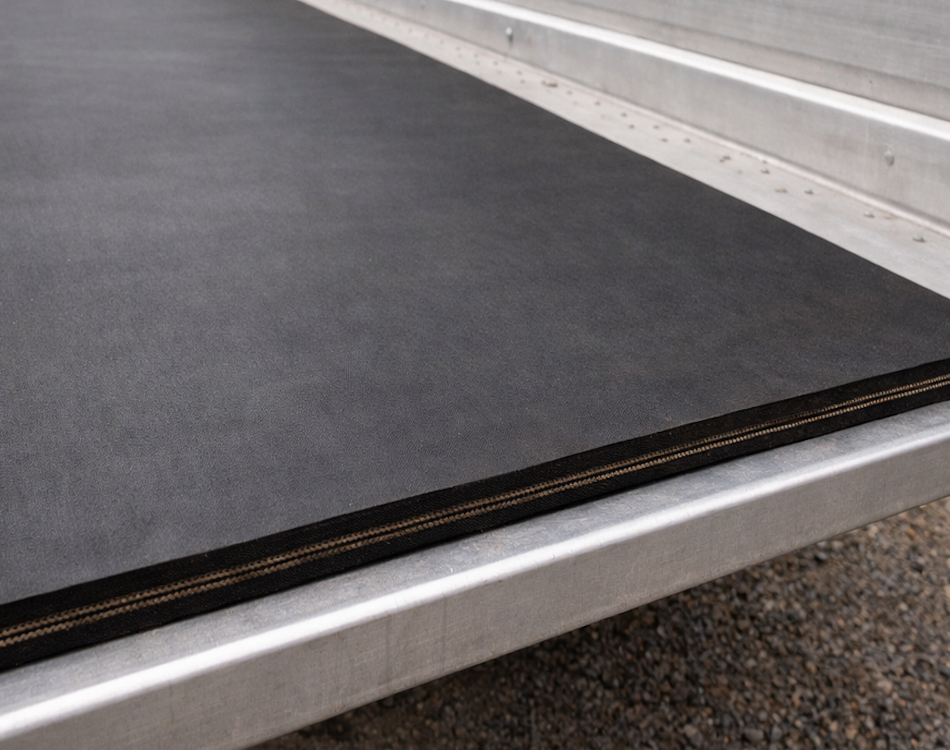
This shows a 24″ x 12 FT replacement checkout belt.
If you are unsure, you can send measurements or a photo and the correct belt can usually be identified quickly.
Replacing a checkout conveyor belt is far less expensive than replacing a checkout lane and can usually be completed with basic tools. Proper measurement ensures the belt tracks correctly and operates quietly for years of service.