
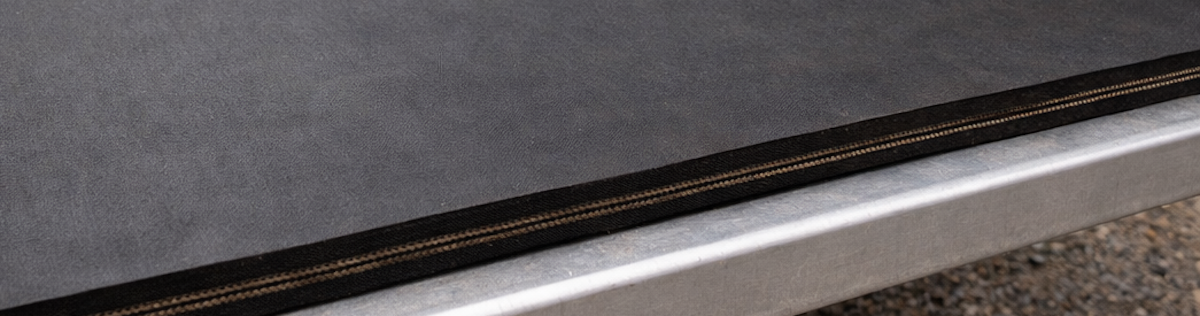
Choosing the right rubber belting for your truck or trailer can improve durability, reduce wear, and extend service life. This guide covers material selection, sizing, thickness, and answers some of the most frequently asked questions about trailer liners and live bottom trailer belts.
Tide Industrial supplies heavy-duty rubber belting for trailer liners, dump trailers, live bottom trailers, walking floor trailers, and other demanding applications. Belting is available in full rolls or custom-cut widths and lengths. We also fabricated endless belts with mechanical lacing for live bottom conveyor systems.
Why Use a Rubber Trailer Liner?
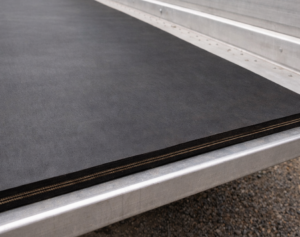
Trailer liners help protect steel trailer floors from abrasion, impact, and premature wear while making cleanup easier and helping many materials unload more smoothly.
Heavy-duty rubber conveyor belting is commonly used because it offers:
- Excellent abrasion and tear resistance
- Long service life
- Impact protection
- Reduced trailer floor wear
- Available in a variety of thicknesses and compounds
Rubber trailer liners are commonly used in:
Dump trailers, end dump trailers, live bottom trailers, walking floor trailers, landscaping trailers, equipment trailers, aggregate hauling, construction, recycling.
Check out our site for product specs on Conveyor Belt Materials for Trailers.
Choosing the Right Rubber Material
For hot asphalt, road milling, and applications involving elevated temperatures or oil exposure, NBR (Nitrile Rubber) is typically the better choice due to its superior heat and oil resistance.
If you’re unsure which material is right for your application, we’re happy to help recommend the best option.
For more details, see our page on Hot Asphalt, Road Work & Trailer Belts.
Live Bottom Trailer Belts
While trailer liner applications use flat rubber belting, live bottom trailers use an actual conveyor belt to move material during unloading. Replacing a live bottom trailer belt generally requires additional information, including belt width, overall belt length, belt thickness, mechanical lacing style and existing belt specifications (if available).
If you’re replacing a live bottom trailer conveyor belt, our team can help identify a suitable replacement. Also see our blog on How Live Bottom Trailer Conveyor Belts Work
Beyond Trailer Liners
Heavy-duty conveyor belting is also used throughout trucks, trailers, and industrial equipment as a durable wear material.
See more on our site about Conveyor Belt Strip Solutions
Common applications include:
- Trailer wear strips
- Conveyor skirting
- Equipment protection
- Snowplow deflector flaps
- Rubber pads
- Pallet strips
- Machine drapes
- and countless other custom wear components
Frequently Asked Questions
Can conveyor belting be used as a trailer liner?
Yes. Heavy-duty rubber conveyor belting is commonly used because it offers excellent abrasion resistance, tear resistance and protects trailer floors from wear.
Can I cut the liner myself?
Yes. Many customers order custom lengths or trim the belting during installation.
What is the difference between SBR and NBR rubber belt strips?
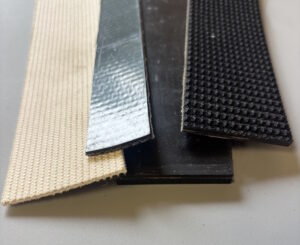
SBR (Styrene-Butadiene Rubber) is typically recommended for gravel, aggregate, sand, demolition debris, mulch, and general construction materials.
NBR (Nitrile Butadiene Rubber), also known as Nitrile or Buna-N, is designed for hot asphalt, road work, and applications involving elevated temperatures or exposure to oils.
Can I order custom lengths?
Yes. We supply custom-cut lengths as well as full rolls for larger projects.
Do you supply complete live bottom trailer belts?
Yes. We supply replacement live bottom trailer belts for many popular trailer manufacturers, including Trout River, Trail King, Etnyre, and others. Belts can be supplied fabricated to size with mechanical lacing where appropriate.
How do I know which belt I need?
If you have the existing belt dimensions, trailer make and model, belt specifications, or photos of the current installation, our team can usually recommend an appropriate replacement.
Why Choose Tide Industrial?
Whether you need a simple trailer liner, heavy-duty rubber strip, or complete live bottom trailer belt, Tide Industrial supplies industrial-quality belting backed by knowledgeable service. If you’re unsure which material or thickness is best, contact our team—we’re happy to help.
We offer:
- Heavy-duty industrial rubber belting
- Abrasion-resistant SBR compounds
- Heat- and oil-resistant NBR compounds
- Custom-cut lengths
- Full rolls
- Endless fabricated belts
- Mechanical lacing
- Fast shipping
- Application assistance
Request a Quote
Need help selecting the right rubber belting?
Call 800-558-7080, email sales@tideindustrial.com, or request a quote online.
Whether you need a replacement trailer liner, wear strips, or a complete live bottom trailer belt, ITide Industrial can help you find the right solution.


Food Grade Conveyor Belts: Types, Uses & How to Choose
Food grade conveyor belts play a critical role in food processing, helping move products safely and efficiently from raw handling through packaging. Whether you’re working

How to Measure a Checkout Conveyor Belt
Checkout conveyor belts eventually wear, crack, or stop tracking correctly after years of daily use. The good news is the checkout lane itself usually does

Trailer Conveyor Systems: How Live Bottom Trailer Conveyor Belts Work
Updated February 2026 – Expanded guide covering trailer conveyor systems, maintenance, and replacement belts. What Is a Trailer Conveyor System? A trailer conveyor system is